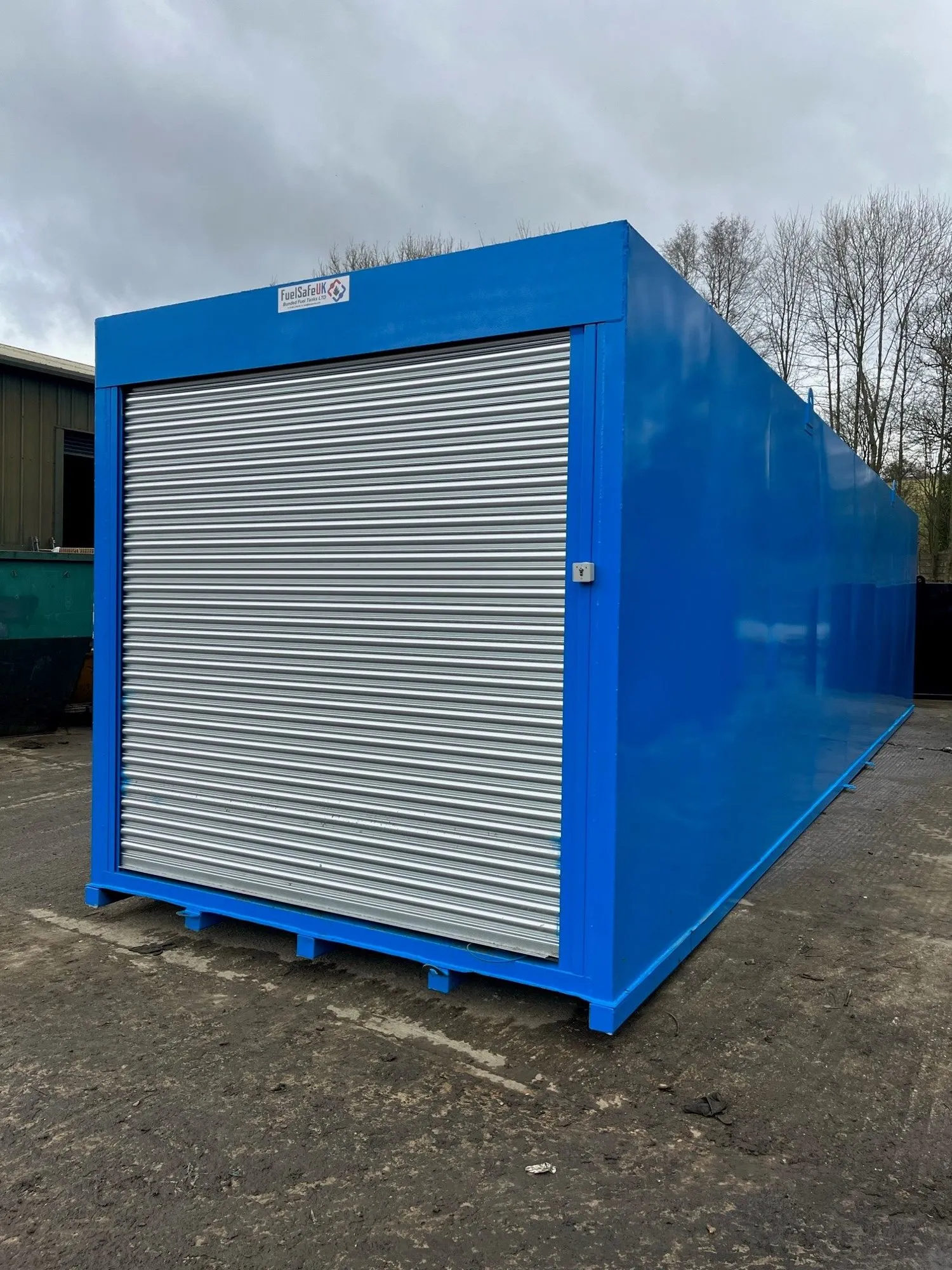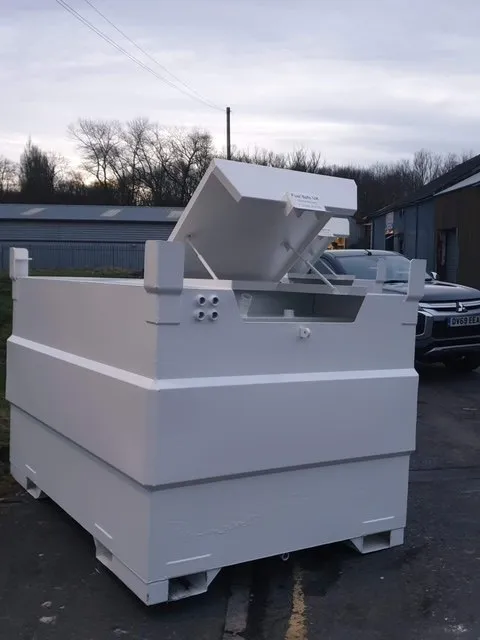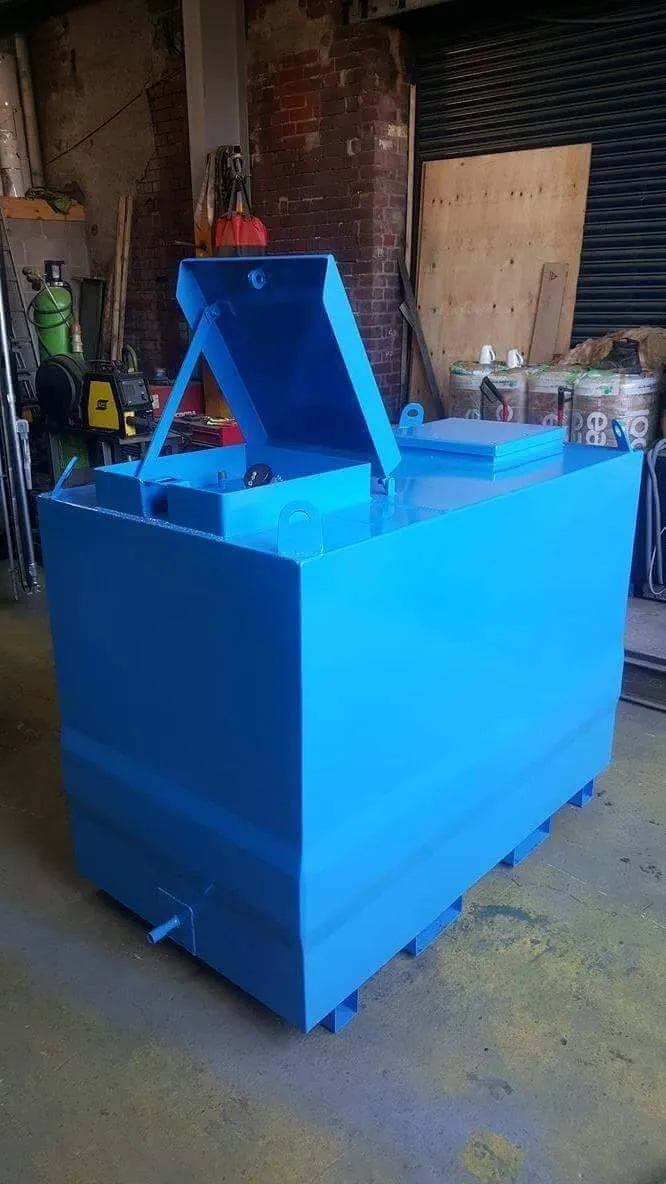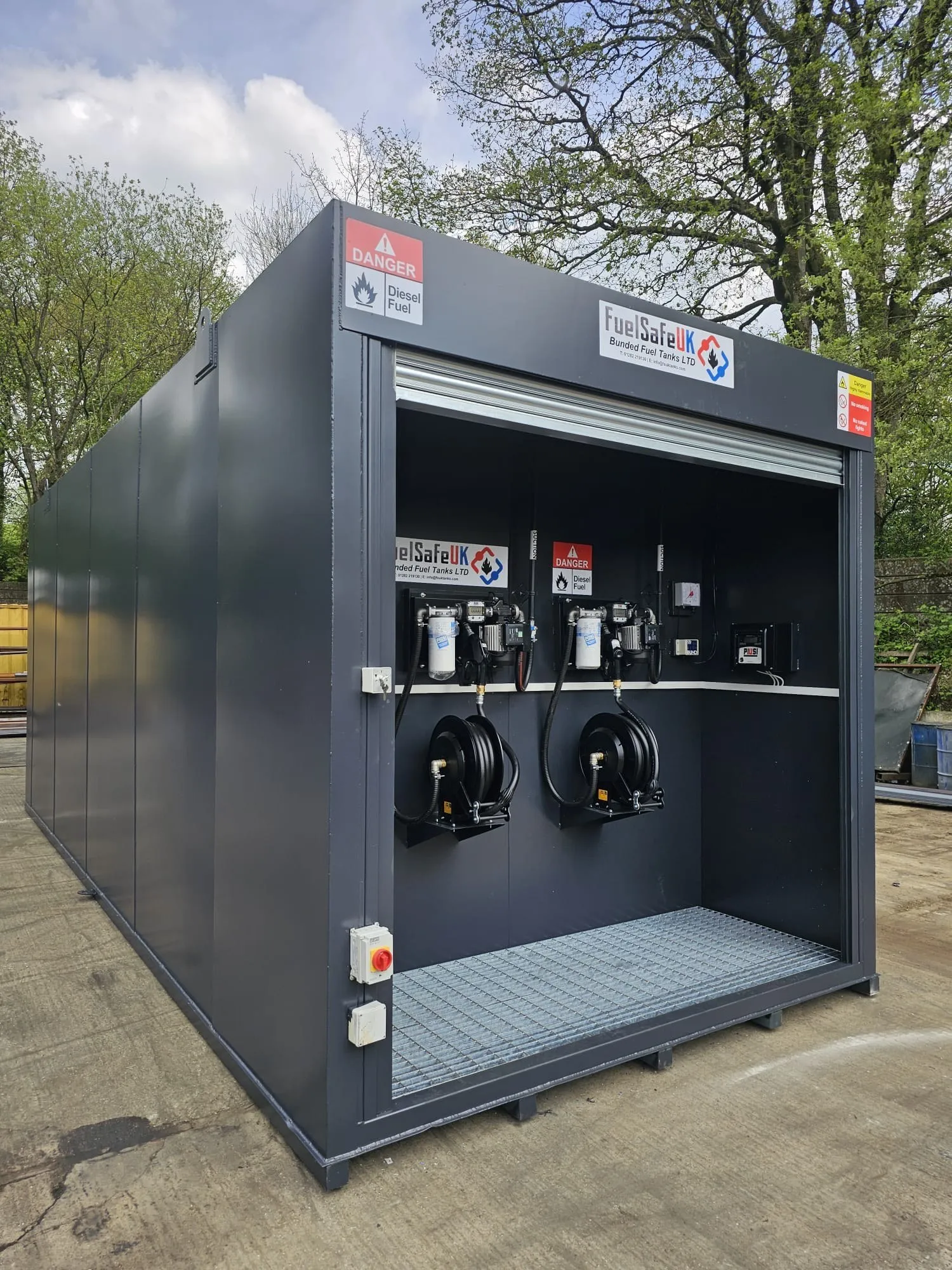
Choosing between a steel and a plastic bunded fuel tank comes down to how you're using it, how long you want it to last, and how much risk of tampering or theft you're dealing with on site. Here's how they actually compare.
Steel bunded fuel tanks
- Extremely durable, steel tanks routinely last 25-30 years with proper maintenance, against roughly 10-15 years for plastic exposed to UV and general wear.
- Far more resistant to tampering. Plastic can be drilled through relatively easily; steel is a much harder target for fuel theft, which matters if your tank sits somewhere unattended.
- Can be manufactured to a wide range of capacities, from small site tanks up to 100,000 litre bulk storage.
- Highly resistant to internal and external corrosion when built to spec, we use 43A steel.
- Flexible on design, bespoke shapes, multi-compartment tanks and custom colours are all straightforward in steel.
Cons: heavier and less straightforward to move than plastic; can corrode over time if paintwork isn't maintained (see our winter protection guide); welded seams need to be built and inspected properly, which is why spec and manufacturer matter.
Plastic bunded fuel tanks
- Lighter and easier to move without lifting equipment.
- Typically a lower upfront cost for smaller capacities.
- Won't rust.
Cons: shorter working lifespan, particularly with UV exposure; much easier to drill or damage, making them a weaker choice anywhere fuel theft is a risk; less flexibility for bespoke shapes or very large capacities.
Which should you choose?
For anything commercial, agricultural or on an unattended site, steel is almost always the better long-term choice, the extra upfront cost is usually recovered through lifespan and theft resistance alone. Plastic can make sense for smaller, well-supervised, short-term needs where budget is the main driver. Our bunded fuel tank cost guide breaks down the actual price difference by size.
Not sure which is right for your situation? Get in touch and we'll talk through what fits your site.