If you store fuel or oil on a business premises in the UK, there's a good chance the law already requires you to have a bunded tank, not just recommends it. Here's how to tell where you stand.
The short version
If your business stores more than 200 litres of oil or fuel above ground, you almost certainly need bunded secondary containment under the Control of Pollution (Oil Storage) Regulations. Domestic properties have a higher threshold, 3,500 litres. Farms have their own separate rules, see our agricultural fuel storage guide, with an exemption below 1,500 litres.
Why the law requires it
A single-skin tank has nothing stopping a leak or spill from reaching the ground, drains or watercourses nearby. A bunded tank's outer containment is designed to hold the fuel even if the inner tank fails, which is why it's the standard the regulations are built around. Our full bunded fuel tank regulations guide covers the detail, bund capacity requirements, design standards, and what enforcement looks like if you get it wrong.
What happens if you don't comply
Non-compliant storage can mean enforcement action from the Environment Agency (or the equivalent body in Scotland, Wales or Northern Ireland), fines, and in a real spill, clean-up costs and insurance complications on top. It's considerably cheaper to get the tank right from the outset than to deal with the aftermath of a leak.
Getting a compliant tank
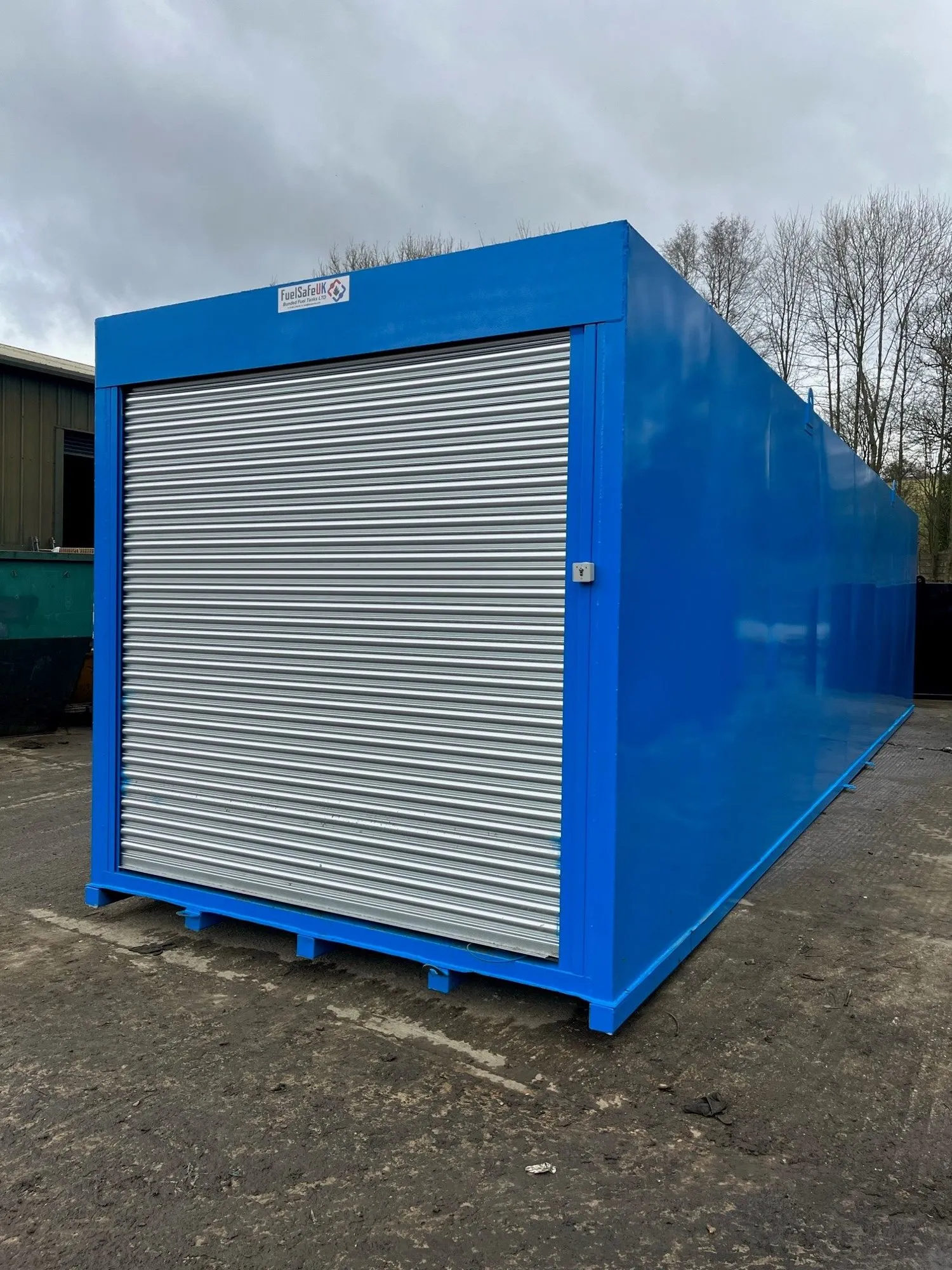
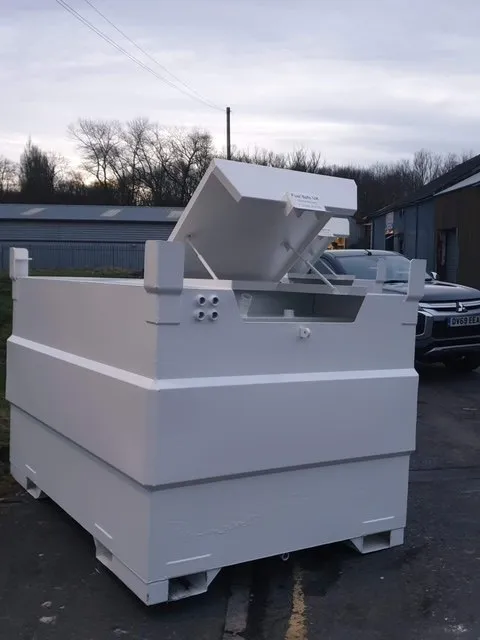
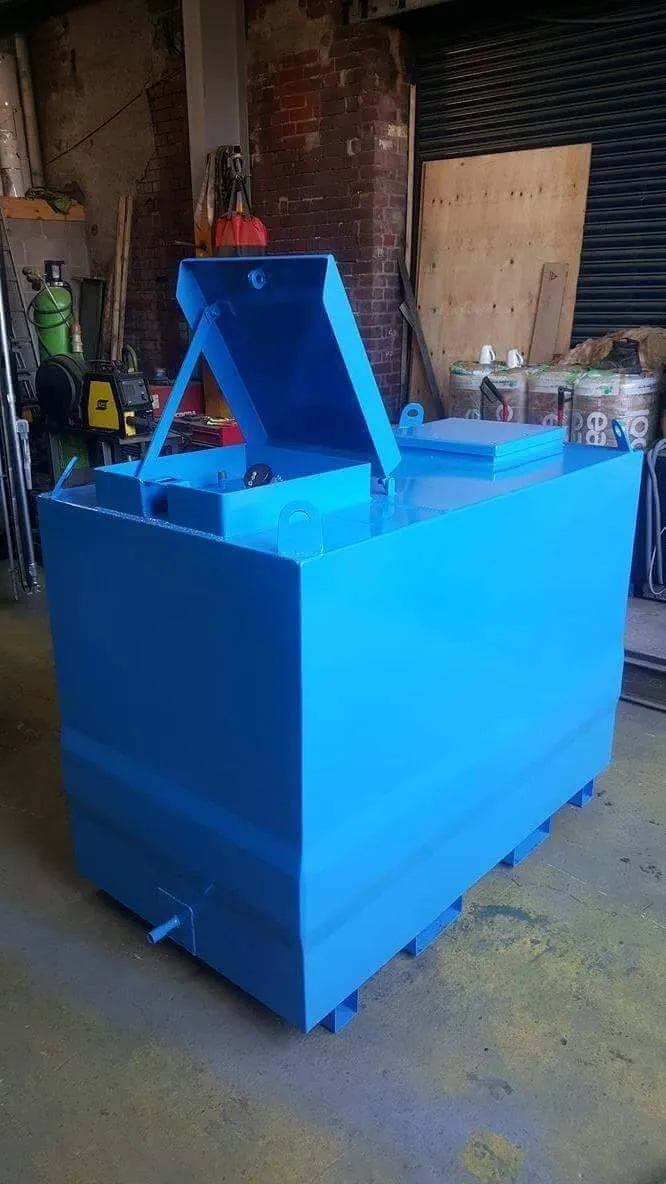
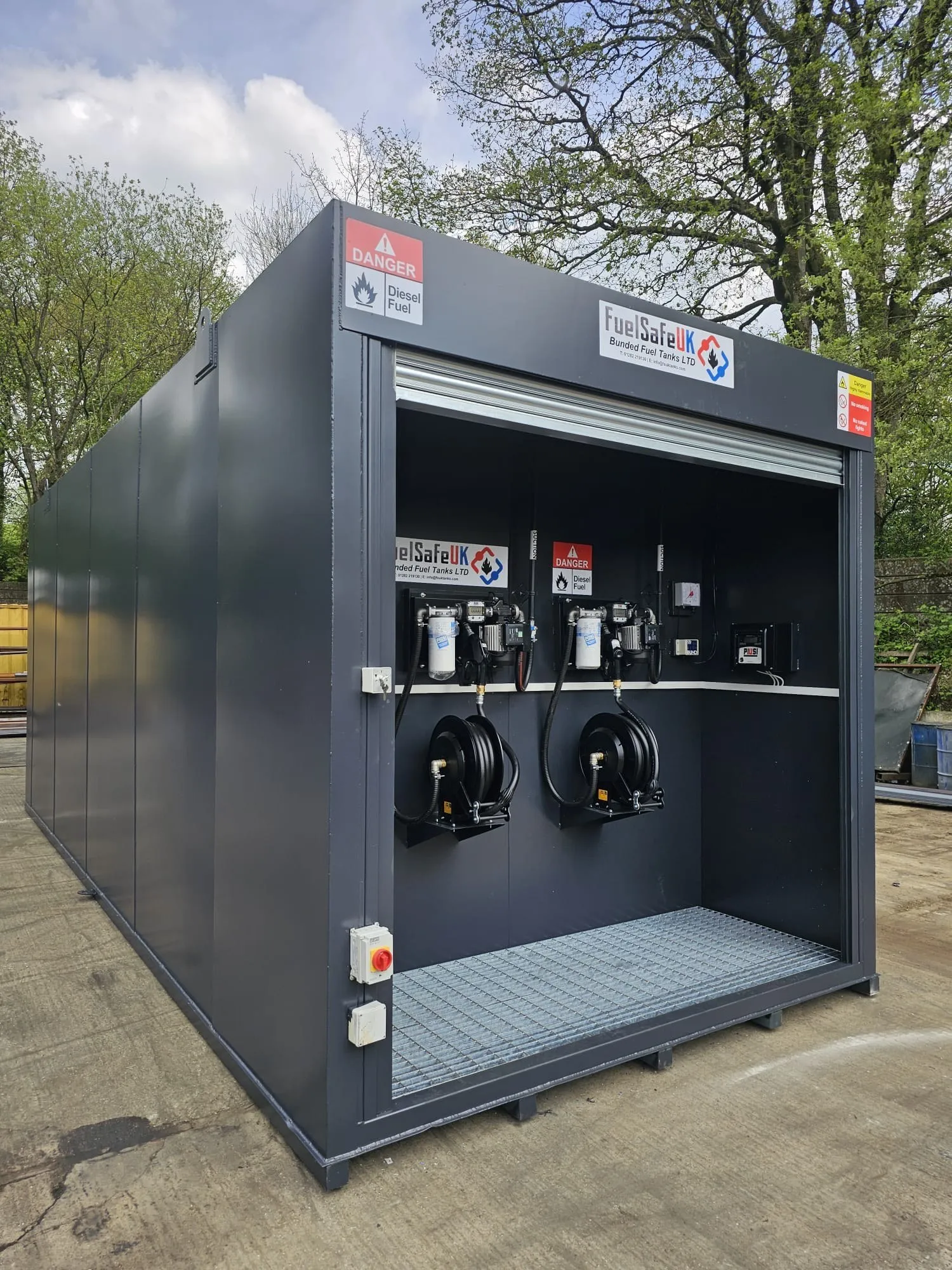
All our steel bunded fuel tanks are built to meet current UK safety standards as a matter of course. If you're not sure whether your current setup complies, or you're storing fuel for the first time, get in touch and we'll talk through what your site actually needs.